
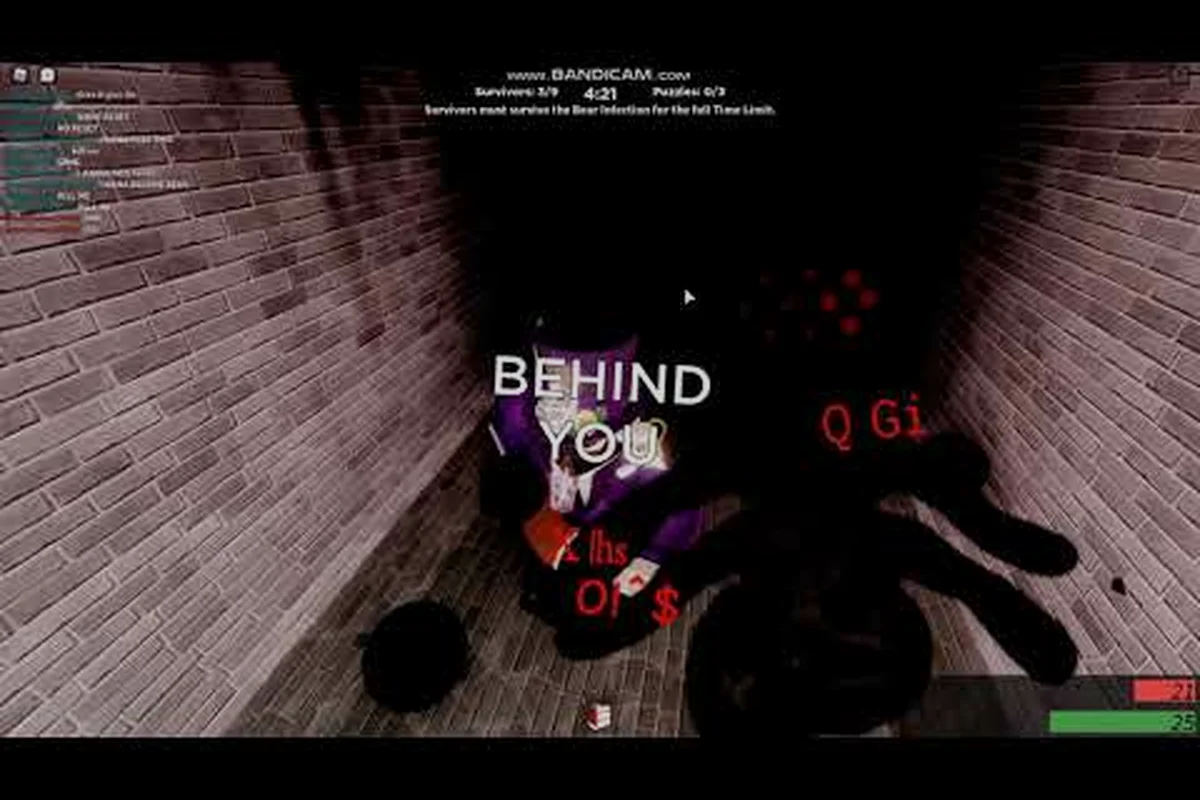
BEAR alpha infection rules determine whether a round favors steady survivors or a fast Monstrosity. Juggernaut, Deluxe, and event variants change the pressure, so learning the lobby timer, objectives, and spectate behavior gives you an edge before the hunt begins.
Bear Alpha infection rules and the core one-versus-all loop
The bear alpha infection rules create a one-versus-all encounter in which the Monstrosity hunts a group of survivors. Player-reported testing indicates that the Monstrosity cannot be damaged, moves faster than a walking survivor, and can sustain its pursuit without the stamina limitations that affect the human-controlled characters. The goal is not simply to outlast the clock; survivors must also complete the round’s assigned Infection objectives.
This structure changes the usual priority of BEAR. Survival still matters, but hiding in a weak position is only useful when it supports objective progress. A survivor who runs away from every risky room can preserve health without earning a successful report. The strongest approach is to break the pursuit, complete the next required task, and relocate before the Monstrosity closes the distance again.
The following table summarizes the core mechanics reported by players and demonstrated in community footage. Values such as exact speed percentages, damage thresholds, and objective durations can change with patches, so treat them as gameplay observations rather than permanent developer specifications.
| Infection element | Reported behavior | Practical meaning |
|---|---|---|
| Monstrosity | Cannot be damaged and outpaces walking survivors | Avoid direct confrontation and preserve escape options |
| Survivor stamina | Drains rapidly, especially while sprinting | Short bursts are safer than one long panic run |
| Survivor damage | Can leave a lasting effect that limits recovery | Treat minor hits as meaningful, not disposable |
| Objective flow | Certain tasks must be completed during the round | Hiding alone does not satisfy the Infection win condition |
| Map pressure | Open ground and long sightlines reduce escape options | Use corners, cover, and short loops |
| End state | The round resolves through objective completion or Monstrosity elimination | Move toward objectives while controlling risk |
How the Infected role changes the match
The Monstrosity does not need conventional weapons to be dangerous because its movement and contact pressure are the core threat. Community reports emphasize that a straight sprint is rarely sustainable, because the Monstrosity can continue pursuing while survivors lose stamina. The useful survivor mindset is to create distance through corners and short routes rather than trying to win a footrace across open ground.
The community Infection showcase by Ivan 99 is a useful reference for the one-versus-all flow. Its footage is player-generated rather than an official rulebook, but it demonstrates the intended pressure: survivors must manage stamina, watch the Monstrosity’s approach, and keep working toward the round objective. YouTube’s BEAR (Alpha) community channel also includes related chase gameplay that can help you recognize how open areas affect pursuit.
The survivor decision cycle
A reliable survivor repeatedly moves through four decisions: identify, disengage, recover, and advance. Identification means noticing the Monstrosity’s direction without standing in a long open sightline. Disengage means using cover and corners before stamina becomes dangerously low. Recovery means finding a safe interval to regain stamina and assess damage. Advance means returning to an unfinished Infection objective rather than hiding indefinitely.
That cycle works because it connects escape with progress. Running in a circle may delay failure, yet it does not complete the objective; returning to the task after breaking line of sight creates a real chance of winning. The cycle also becomes more important in Juggernaut, where the available margin for error may be narrower than in the standard version.
Bear Alpha Juggernaut mode: faster pressure and narrower windows
The bear alpha juggernaut mode is the more aggressive-facing interpretation of the Infection rules, centered on speed and relentless pursuit. Because the mode is still evolving, the safest source of truth is the current lobby information and the round behavior visible in-game. Community testing describes an especially threatening Monstrosity that can sustain its chase, while survivors face rapid stamina loss and meaningful lingering damage.
That combination shifts the safe distance requirement. In ordinary play, a survivor may be able to cross a short exposed area and reach a corner before the Monstrosity closes in. In Juggernaut, the margin can shrink quickly, making route choice more important than raw speed. Players should anticipate faster turns around structures, shorter peeks, and fewer chances to recover stamina without being found.
| Juggernaut pressure point | What changes for survivors | Better response |
|---|---|---|
| Pursuit speed | Less room after a missed turn | Change direction before reaching an exposed dead end |
| Stamina loss | Long escapes become less efficient | Use short sprints between nearby cover points |
| Lingering damage | A single hit can affect later routes | Prioritize clean disengagement over last-second attacks |
| Objective pressure | Delay gives the Monstrosity more opportunities | Prepare tasks before entering an area |
| Visibility | Open maps expose survivor routes | Stick to short loops and structures that block sight |
Surviving Juggernaut without exhausting stamina
The best Juggernaut tactic is to stop treating stamina as a health bar. It is a route budget, and every unnecessary meter spent reduces the decisions available later. A survivor who spends most of the sprint allowance escaping an empty building has little left for the next objective. A survivor who sprints only when the Monstrosity has lost sight reserves enough stamina for a second escape.
Before leaving cover, check three conditions: the exit is visible, the next safe point is close, and the objective can be reached without crossing a wide lane. If any answer is unfavorable, the better move is to wait for the pursuit pattern to shift. Juggernaut rewards patience because standing still for a short interval is often safer than making a panicked sprint across exposed terrain.
The broader Monstrosity behavior is covered in BEAR alpha hunt gameplay and bear strength details, which can help you distinguish pursuit pressure from the mechanics of the standard hunt. Keep in mind that Juggernaut-specific behavior should still be confirmed from the active lobby because balance changes may alter its impact.
When to abandon an objective
Abandoning an objective is not a failure if done deliberately. If completing it requires a long exposed crossing and the Monstrosity is already closing, retreat, regroup, and seek another approach. Trying to finish while being chased converts a manageable escape into a direct sprint with no reserve stamina.
At the same time, repeatedly abandoning every task can leave survivors with no path to win. Decide which objective is most accessible from the current area and treat it as the next target. A partial route toward a useful task can be safer than a retreat to an unrelated part of the map. The objective remains unfinished until its required interaction is completed, so gathering around it without acting does not count.
Bear Alpha Deluxe rules: interface, rewards, and mode distinctions
The bear alpha deluxe rules cover the broader Deluxe context rather than a simple second version of every Infection match. Deluxe may affect access, presentation, rewards, cosmetics, or event participation depending on the current release. Because these details can be tied to live accounts and rotating content, the game’s lobby and official storefront or event notices should take priority over assumptions based on older guides.
For Infection specifically, the most important Deluxe distinction is whether a listed mode changes the match itself or only changes what is available around it. A cosmetic reward, lobby banner, or unlock status does not automatically alter survivor stamina, Monstrosity damage, or objective requirements. Conversely, a variant labeled as a gameplay mode may change the pressure even when its name sounds cosmetic.
| Item to verify | What it can mean | What it does not automatically mean |
|---|---|---|
| Deluxe access | Permission to enter related content | A hidden change to Infection objectives |
| Deluxe skin or reward | Account or collection progress | Better stamina or faster escape speed |
| Deluxe event listing | A scheduled variant or reward track | Identical rules in every event |
| Juggernaut label | A faster or more aggressive match state | A guaranteed win for either side |
| Spectator option | Ability to watch an ongoing round | A way to join mid-match |
| Lobby timer | Time before a phase or match begins | A substitute for reading the mode panel |
Reading the mode panel before the lobby fills
Spend the opening seconds checking the selected mode, objective wording, and any restriction notice. This is particularly important when players are testing Juggernaut or joining a temporary event. The BEAR alpha lobby guide can help with the broader flow of round setup, timer interpretation, and the distinction between lobby time and in-round time.
The bear alpha lobby countdown should be treated as a preparation window, not wasted time. Confirm the role assigned to you, note which task appears first, and check whether the mode indicates a separate event objective. If the countdown reaches zero without the match beginning, the lobby may still be filling. If the match starts with an unexpected rule, recheck the panel because event versions may override the standard briefing.
Deluxe cosmetics versus mechanical advantages
Deluxe content should not be confused with a stat advantage unless the game explicitly says so. The BEAR alpha Deluxe skin collection focuses on cosmetic ownership and acquisition, while Infection performance comes from movement decisions and knowledge of objectives. This distinction helps players avoid assuming that a premium presentation changes the Monstrosity’s speed or makes survivors safer.
Event labeling adds another layer. A Deluxe reward may be connected to Infection, yet that does not mean every Deluxe match uses the same rules. Read the event title and objective description when the lobby opens. If a temporary mode changes the format, record what differs rather than carrying assumptions from a previous session into the next round.
Bear Alpha event rules and objective flow
The bear alpha event rules can temporarily modify objectives, rewards, or available modes while retaining BEAR’s broader asymmetric structure. For Infection, the most important event rule is usually stated in the lobby: what survivors must complete and what happens when the objective is finished. The community sources supplied for this article do not establish a permanent, universal event schedule, so event-specific details should be checked against the current in-game briefing.
A reliable way to interpret an event is to separate three layers. The base layer is the one-versus-all chase: the Monstrosity hunts, survivors flee, and stamina limits mistakes. The objective layer determines what survivors need to do to win. The reward layer describes what players receive or track during the event. An event may change one layer without visibly changing the others.
| Event element | What to inspect | Example of the practical question |
|---|---|---|
| Mode name | Whether it changes chase pressure | Is this standard Infection or a Juggernaut-style variant? |
| Objective text | What action completes the report | Does the task require interaction, collection, or delivery? |
| Timer marker | What the countdown controls | Is it the lobby start, an event phase, or the round limit? |
| Reward notice | What is temporary or account-bound | Is the reward tied to this event window? |
| Spectator label | Whether observation is allowed | Can dead or disconnected players watch? |
| Restrictions | Which characters or actions are limited | Are tools or abilities unavailable? |
Event objectives change the route, not the danger
When a temporary objective changes, survivors should calculate distance from the current position rather than rushing toward a familiar task. A closer objective is valuable only if the route remains survivable. Look for intermediate cover, identify which direction the Monstrosity came from, and avoid leading it directly through the objective area if another entrance exists.
The BEAR alpha badge hunt overview can also help distinguish event progress from ordinary match progression. Badge objectives may involve exploration and searching, whereas Infection objectives normally require the team to finish a report-related action before the round resolves. If the lobby blends both systems, the explicit objective text is the deciding factor.
What to do when an event rule changes mid-session
First, identify what changed rather than assuming the match is broken. Read the updated instruction, check whether the objective counter moved, and notice whether the Monstrosity’s behavior also shifted. Some changes only affect scoring or rewards; others may redirect survivors to a different task. The safest response is to preserve current progress and let the new rule settle before taking unnecessary risks.
If the countdown approaches zero while survivors are still traveling, stop waiting indefinitely. Group movement can finish a task faster, but it also gives the Monstrosity a larger target. Send only the people needed for the interaction when possible, keep one route open, and avoid bunching around objectives that do not require every player. Event efficiency and escape safety should be balanced rather than treated as separate goals.
Lobby countdowns, spectating, and round-state decisions
The bear alpha lobby countdown and bear alpha spectate rules are easy to misunderstand because both concern what happens outside direct movement. A pre-match countdown tells players how much preparation time remains, while spectating determines what a player can do after becoming dead, disconnected, or assigned as an observer. Neither should be confused with the survivor round timer.
| State | What the player can do | Main priority |
|---|---|---|
| Active lobby countdown | Read rules, choose targets, plan routes, test controls | Prepare before movement begins |
| Active match | Move, complete objectives, manage stamina | Break pursuit and finish required tasks |
| Dead or downed survivor | Observe if spectating is enabled | Learn the Monstrosity’s route and objective location |
| Disconnected player | Rejoin or watch if the session permits | Check whether the player can still influence or observe the match |
| Post-match | Review results and event progress | Record what worked before the next session |
Using the countdown to build an escape plan
A useful countdown routine has three parts. First, identify the initial objective and the safest approach. Second, note nearby corners, doorways, and interior loops. Third, decide how much stamina to reserve for the first unavoidable chase. This routine turns the bear alpha lobby countdown into practical preparation rather than dead time.
For teams, keep responsibilities simple: one player can watch the Monstrosity’s initial direction while others locate the objective, and everyone should know the first fallback point. For solo or smaller groups, choose a route with more than one escape direction. A dead-end objective may look faster, but it can force a survivor into the same sightline every time.
What spectating can teach
Spectating is useful after elimination because it exposes mistakes that are hard to see during a panicked chase. Watch the Monstrosity’s path between objective locations, identify whether survivors repeatedly cross the same open area, and note when a task is attempted in sight of the pursuer. The bear alpha spectate rules also matter for players who lose connection or enter as observers; available views and reconnection behavior should be checked in the current lobby because they can change with platform or version.
Community discussion in the AsymHorror BEAR alpha mechanics thread reinforces several reported lessons: open maps are harder to escape, survivors should use juking and hiding spots, and permanent damage makes every contact meaningful. Treat these as player observations rather than guaranteed formulas. They are still useful because each point supports a decision that can be tested in the next round.
Spectating is not a substitute for preparation
Watching a teammate reveal the objective’s location can help the rest of the team plan, but spectating cannot complete an objective or eliminate the Monstrosity. If the rules prevent dead players from communicating specific information, avoid assuming that every spectator can act as a navigator. Confirm whether voice, text, or team pings are available.
The same caution applies to objectives outside the standard report. If an event introduces a special task, the quest reward and item overview provides useful context on how separate BEAR quest systems can differ from Infection’s match objective. The rule remains simple: complete what the current lobby explicitly requests, because a related badge or quest is not automatically part of the round.
Practical Infection strategies by round state
The strongest response to the bear alpha infection rules depends on the current state: whether the round has started, whether the Monstrosity has seen you, and whether the objective can still be completed. A universal tactic cannot cover every phase because open pursuit, hiding, and objective work require different movement decisions.
| Round state | Survivor priority | Juggernaut adjustment | Common mistake |
|---|---|---|---|
| Before contact | Save stamina and identify routes | Prepare a second escape path | Sprinting before the Monstrosity appears |
| First sighting | Break line of sight | Turn early rather than late | Running through the middle of open ground |
| Tight pursuit | Reach the nearest cover | Avoid committing the last stamina | Fighting when a clean retreat exists |
| Hidden period | Recover and reposition | Start moving before the Monstrosity returns | Waiting beside a completed task |
| Objective phase | Finish the required action | Coordinate a quick entry and exit | Gathering around without interacting |
| Near objective failure | Reassess whether another route exists | Preserve enough stamina for retreat | Forcing an impossible completion |
A four-step survival routine
Start with read, meaning identify the Monstrosity’s position, nearby cover, and the objective direction. Then use break, which means move out of sight before stamina reaches a critical level. After that, use recover to regain stamina and re-enter the route from a different angle. Finally, use complete to finish the required task and leave the location rather than waiting there.
This routine is adaptable without requiring exact speed or damage numbers. It also explains why map knowledge and stamina control matter more than raw sprinting. If a survivor completes the objective but remains beside it, the round can still turn against the team. Leaving promptly converts a successful interaction into a chance to continue.
Team play without creating one large target
Teams should avoid treating every survivor as one unit. Small groups can split temporarily around a task, but they should reconverge near a defensible route before the Monstrosity arrives. The survivor carrying the best information should not be the only one near a dangerous objective, and teammates should avoid leaving a single player isolated in a building with no alternate exit.
Communication is especially important when the objective requires several people. Establish who interacts, who watches the approach, and where everyone retreats. If the lobby provides limited communication in a special event, assign those roles through simple gestures and visible movement. Clear roles reduce hesitation, which often causes a group to waste stamina after the Monstrosity appears.
A final pre-match checklist
Before the lobby countdown reaches zero, confirm the mode, objective, and reward text. Locate at least two safe approaches to the first task. Decide where survivors will regroup if separated. Avoid spending stamina while checking optional scenery. If playing Juggernaut, shorten the first route and preserve a reserve for a second escape. If the event differs from standard Infection, write down the changed rule rather than trusting muscle memory.
The practical takeaway is straightforward: BEAR infection rounds reward objective discipline, route control, and careful stamina use rather than blind sprinting. Juggernaut narrows the margin for error, Deluxe and event content can change what the lobby asks, and the lobby countdown plus spectate options reward preparation. Read the current briefing, confirm the match-specific rules, and use the first safe route to build a plan that still works when the Monstrosity arrives.
Frequently Asked Questions
What are the main bear alpha infection rules?
The core rules make BEAR a one-versus-all match: one Monstrosity pursues multiple survivors, the Monstrosity cannot be damaged, survivors have limited stamina, and damage can have lasting effects. Survivors generally must complete an Infection objective rather than hide until time expires. Exact numbers can vary, so the current lobby briefing is authoritative.
Does bear alpha juggernaut mode change survivor stamina?
Community reports indicate that survivors still rely on limited stamina in Juggernaut, while the Monstrosity maintains faster and more persistent pursuit. The practical difference is less room for error: survivors should take shorter routes, turn before entering wide sightlines, and preserve stamina for a second escape. Confirm the active version’s behavior in the lobby because balance updates may affect it.
Are bear alpha deluxe rules the same as Juggernaut rules?
No. Deluxe is a broader content and rewards context, while Juggernaut describes a more aggressive match state. A Deluxe reward or cosmetic does not automatically improve movement or change the Infection objective. Players should verify whether a particular lobby introduces a gameplay variation and read its objective and timer information separately.
What does the bear alpha lobby countdown control?
The lobby countdown generally provides preparation time before the match begins. Players can review the mode panel, locate the first objective, check controls, and plan an escape route. It is not the same as the in-round survival timer, and temporary event countdowns may control a separate phase, so players should follow the label shown in the lobby.
Can dead or disconnected players spectate in BEAR Alpha?
Spectate behavior may be available after elimination or disconnection, but available views and reconnection options can differ by version or platform. The bear alpha spectate rules should therefore be checked during the current session. Spectators can learn the Monstrosity’s routes and objective placement, although observing does not replace completing the match objective or interacting with the team.