
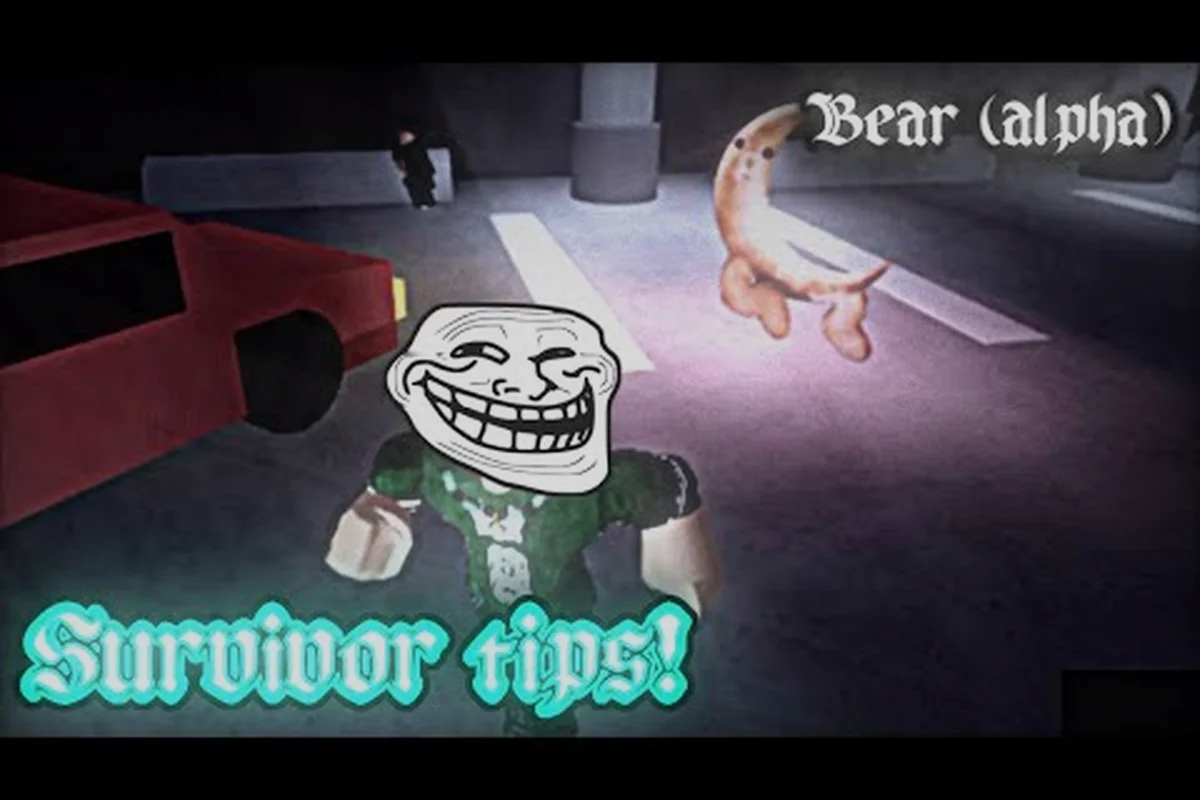
Surviving BEAR’s major chases comes down to reading danger early, preserving escape routes, and avoiding predictable movement. This guide explains how to survive threats such as Tears Before Bedtime with practical tactics for dodging, hiding, and making safe escapes.
Core Survival Principles for Bear Alpha Chases
The most important survival rule in BEAR is to treat every chase as a changing situation rather than a fixed puzzle. The Monstrosity can close distance, investigate noise, and pressure players who repeatedly use the same route. A strong survivor therefore balances three goals: completing objectives, remaining observable only when necessary, and preserving at least one viable path of escape.
Community clips of the Tears Before Bedtime chase emphasize recurring patterns such as controlled flashlight use, deliberate line-of-sight breaks, and careful route changes. Those details are player-reported rather than official specifications, but they provide a practical basis for improving survival. This bear alpha starting guide treats those observations as flexible rules rather than fixed scripts.
Survival Priority Checklist
Before any major encounter, rank survival needs by the time pressure they create: immediate escape, stamina preservation, objective completion, and useful teammate information. For example, if the Monstrosity closes distance while you are carrying a report, use an open corner to break its line of sight, recover stamina, then decide whether the report is worth another retrieval attempt. This order prevents a low-value task from turning a manageable encounter into a chase with no stamina left for distance.
-
Objective progress: Complete only the tasks that contribute to the current report or survival condition.
-
Route redundancy: Know at least two exits from an open area, and avoid entering dead ends without another option.
-
Noise control: Walk instead of sprinting whenever the objective does not require speed.
-
Sightline discipline: Do not remain in the Monstrosity’s direct view longer than necessary.
-
Recovery awareness: Keep enough stamina available to create distance instead of spending it on a panic sprint.
-
Team communication: Call out nearby threats, objective locations, and fallen teammates before continuing.
| Survival priority | Why it matters | Better response |
|---|---|---|
| Stamina control | A depleted survivor cannot create distance | Sprint only after the threat gains a clear line |
| Noise control | Movement can attract investigation | Walk through exposed areas and sprint around safer corners |
| Objective focus | Greed increases exposure | Finish high-value tasks before optional searches |
| Route planning | Dead ends amplify pursuit pressure | Turn away before the exit becomes blocked |
| Team awareness | Isolation makes mistakes harder to recover | Share useful information without flooding chat |
The Three-Stage Escape Pattern
A dependable escape uses three stages: identify, separate, and recover. Identification means confirming whether the threat is actually pursuing you or merely moving toward a noise. Separation means changing position through corners, doors, elevation changes, or other obstacles that interrupt a direct chase. Recovery means moving away from the last known danger zone rather than continuing along the obvious path.
| Escape stage | Player action | Mistake to avoid |
|---|---|---|
| Identify | Watch movement, sound, and timing before reacting | Sprinting at every distant noise |
| Separate | Break line of sight and change direction | Running in a straight line down the same corridor |
| Recover | Reach a defensible area or regroup with teammates | Returning to the location that triggered the pursuit |
Players who cannot recognize the Monstrosity’s movement should first study the Bear Alpha Monstrosity guide, which explains the enemy side of the match. Knowing what the Bear is trying to accomplish can help you predict whether breaking sight will be enough or whether you need to change rooms and routes.
Bear Alpha Control Timing and Button Choices
Survival often fails because a player presses the correct button at the wrong time. The bear alpha controls guide is less about memorizing every binding and more about understanding movement commitments. Sprinting, jumping, looking, and interacting each change your options, and many dangerous situations begin when one action prevents another during a chase.
Because BEAR may receive control or interface revisions, test the displayed bindings before a match rather than assuming a console layout transfers directly to another platform. The practical goal is to move while gathering information, preserve resources, and avoid an animation that leaves you exposed near a corner.
Reading Movement as a Resource
Movement controls should be treated like a resource budget. Walking is the baseline; sprinting is a temporary burst; looking behind you is valuable but can reduce forward awareness; jumping can help clear small obstructions but should not be treated as a universal escape tool. The strongest survivor asks what information the next movement will provide before committing to it.
| Situation | Preferred movement | Reason |
|---|---|---|
| Unknown room with no audible threat | Walk and look around | Limits noise and reveals possible routes |
| Threat confirmed in another area | Walk through a parallel route | Avoids announcing your exact path |
| Direct pursuit with clear distance | Sprint away, then break line of sight | Creates separation before stamina drops |
| Narrow corner or doorway | Turn before entering | Prevents the Monstrosity from trapping you |
| Low ceiling, cable, or small obstacle | Jump only when the landing is clear | Avoids wasting stamina on a poor route |
Look Behind, Then Commit
Players frequently look back too briefly to recognize the Monstrosity, then sprint in the wrong direction. A better routine is to glance behind, identify the gap, and select the safest available exit before accelerating. If the Bear is close, avoid stopping beside an open doorway where it can cut off the next turn.
| Mistake | Why it increases danger | Better habit |
|---|---|---|
| Holding the sprint button continuously | Stamina disappears before a second escape | Sprint in short, purposeful bursts |
| Jumping during every chase | Stamina is spent and the landing may be exposed | Jump only for a clear obstacle or elevation change |
| Watching the Bear while walking backward | Movement becomes erratic and obstacles are missed | Look, choose a route, then move forward |
| Repeating the nearest doorway | The Monstrosity can anticipate the shortcut | Rotate among two or more exits |
Check Your Displayed Keybinds
Use this quick routine before joining a match: confirm every action in the controls screen, then test movement, sprint, jump, interact, and report in a safe area. If sprint is configured as a toggle, make sure you know whether tapping it once or holding it produces reliable movement; on platforms where backward movement can behave differently, verify that looking behind you does not slow or cancel your escape route. For a concrete check, walk in a straight line, sprint briefly, turn 180 degrees, and complete one interaction without pressing unrelated keys. This prevents a mismatch such as an outdated sprint key or an incorrect interaction hold time from costing you a valuable evasion window.
-
Open the controls screen and identify movement, sprint, jump, interact, and report actions.
-
Test whether sprint is held or toggled.
-
Check whether looking backward affects movement on your platform.
-
Learn the interaction hold time.
-
Repeat the check after major updates because bindings may change.
This approach is more reliable than following an outdated community diagram, because an old screenshot can show an obsolete sprint binding, interaction prompt, or report command even when the current controls screen has changed. If you are still learning the complete match loop, use the Bear Alpha beginner guide to connect movement, reporting, and survivor objectives. For example, verify that sprint input matches the displayed keybind before relying on it to create distance from the Bear, then check the report hold time so a valid emergency call does not fail during a chase.
Escaping the Tears Before Bedtime Chase
Tears Before Bedtime is one of the most demanding situations to approach blindly. The chase is remembered for escalating pressure and limited room to make mistakes, but exact behavior can change between rounds and player reports. Since the available videos are community-created, treat every specific pattern as a testable possibility rather than a guaranteed rule.
The central survival objective is not simply outrunning the Bear. You need to break its expectation, remain out of its direct line, and use the objective state to determine whether you should hide, move, or complete a final task. A panic sprint may gain several seconds, but a good route change can remove you from the chase entirely.
Pre-Chase Preparation
Preparation starts before the threat enters the active area. Learn the nearest corners, doors, and exits. Note which surfaces appear breakable or interactive without assuming every obstacle can be destroyed. Listen for directional cues, and save your sprint for a confirmed approach.
| Preparation step | Practical benefit |
|---|---|
| Identify two exits | Prevents dependence on a single escape route |
| Locate nearby interactables | Creates an alternative source of noise or distraction |
| Listen before crossing | Helps separate a direct pursuit from distant movement |
| Save partial stamina | Provides room for one correction after a misjudged turn |
| Tell teammates your direction | Reduces accidental blocking and creates a clean regroup point |
Breaking the Pursuit Line
A direct chase is easiest to maintain. Once the Monstrosity has your position, use corners and doorways to interrupt its view, then change direction instead of continuing down the same corridor. If the Bear tracks you around a corner, use the next available split in the route. One corner may only create a delay; two consecutive direction changes are more likely to create uncertainty.
Community footage, including the player-created chase clip, illustrates the value of breaking line of sight rather than relying on a single long sprint. This is reported gameplay evidence, not an official guarantee, so test the pattern in each encounter.
Hide When Investigated, Move When Tracked
Hiding is most useful when the Monstrosity is investigating rather than tracking you directly. Moving is usually better when it has already confirmed your position, because remaining still may leave you inside its search area. A practical rule is to hide only when movement would make you more obvious or expose you to a dead end.
| Monstrosity behavior | Safer choice | Reason |
|---|---|---|
| Moving toward a distant noise | Hide or wait behind cover | It may not know your exact position |
| Following your movement directly | Break sight and relocate | Standing still can preserve the pursuit |
| Searching the same room repeatedly | Move through a secondary exit | Silence alone may not break the search |
| Standing near your hiding place | Leave immediately if possible | Noise or movement may reveal you |
| Close to an open doorway | Turn before crossing | The doorway becomes a predictable catch point |
Surviving Repeated Pressure Without Burning Resources
Repeated chases punish players who use the same emergency response every time. The first sprint may save you, but sprinting immediately after every noise can leave you weak when a real pursuit begins. Survival depends on separating false alarms from confirmed danger and varying your routes across a match.
The bear alpha full walkthrough mindset is less about memorizing one flawless route and more about building repeatable decisions. If every objective room leads into the same corridor, the Bear learns your pattern faster. Changing your order, approach angle, and destination can preserve uncertainty even when the map layout remains unchanged.
Objective Triage Under Threat
When a chase interrupts your work, separate objectives into three categories: required, helpful, and optional. Required objectives move to the front of your plan. Helpful objectives may be worth completing only when the route remains safe. Optional objectives should wait until the immediate threat has cleared.
| Objective class | Example behavior | When to pursue it |
|---|---|---|
| Required | Progress tied to the report or match objective | Whenever it can be reached without a guaranteed confrontation |
| Helpful | Adds progress, evidence, or an alternative route | When two exits remain open |
| Optional | Loot, exploration, or a low-priority collectible | Only after threats are confirmed away |
| Risky | Task near the Monstrosity’s likely path | Only with a clear escape plan and teammate support |
For broader objective routes, the Bear Alpha treasure quest guide can help distinguish essential progress from optional collection. Combining that route knowledge with threat triage prevents a short objective list from turning every trip into an extended chase.
Break Repeated Routes
Change at least one element whenever you revisit a familiar route: approach from another side, complete tasks in a different order, or use a nearby objective as a reason to turn. The Bear’s pressure becomes less predictable when survivors do not move like a fixed conveyor belt through the same rooms.
| Repeated behavior | Predictable result | Adjustment |
|---|---|---|
| Same exit after every chase | The threat can anticipate your route | Mark at least two exits and alternate them |
| Sprinting at every sound | Stamina disappears without a confirmed target | Walk toward uncertain sounds |
| Always completing nearby tasks | Objective locations become predictable | Rotate between near and distant tasks |
| Clustering tightly | One mistake affects several teammates | Spread out while maintaining communication |
| Returning immediately to fallen teammates | The search area becomes exposed | Approach from a different direction |
Stamina Management
Treat stamina as the difference between reacting and recovering. Hold back during ordinary exploration, because a direct chase may begin seconds after you hear heavy movement. Short sprints placed before corners are generally more useful than one long sprint across an exposed room.
A practical rule is to maintain enough stamina for one full sprint plus a short correction. If you cannot, you are already too close to the next corner or using too much stamina on uncertain noises. The exact stamina amount is not stated in the available verified material, so judge the meter directly rather than relying on a numerical threshold.
Team Coordination for Safer Chases
Solo and team survivors need different communication habits. Solo players can use sound, camera direction, and route planning as substitutes for teammates. Teams have more information available, but excessive callouts can obscure urgent warnings. Effective coordination is brief, prioritized, and tied to information that changes another player’s next action.
Information That Changes Decisions
Useful callouts identify a location, threat direction, and immediate consequence. “The Bear is near me” is less effective than “The Bear is in the east hallway; I’m turning north.” Exact room names help only when everyone knows the map, so combine landmarks with direction when possible.
| Callout type | Example | Decision it supports |
|---|---|---|
| Threat location | “Bear behind the storage room” | Choosing a different exit |
| Threat movement | “It’s moving toward the stairs” | Holding an angle or rotating |
| Objective location | “Generator is upstairs” | Directing the next teammate |
| Player condition | “I’m down near the entrance” | Organizing a rescue approach |
| Route warning | “That door is blocked” | Preventing a wasted detour |
Player-created survival videos such as this BEAR survivor tips video can offer additional examples of team positioning. Because these videos represent player experience rather than an official rulebook, compare them against your own match and adjust to the current version.
Safe Regrouping
Regrouping does not mean gathering in the nearest open room. Select a location with at least two entrances, enough cover to interrupt sight, and enough distance that one survivor entering cannot lead the entire team into a trap. Keep one person watching an approach while others move through the regrouping point.
| Grouping condition | Good or bad | Explanation |
|---|---|---|
| Open room with one entrance | Bad | A single Bear can block the group |
| Corridor junction | Conditional | Useful only when both branches remain open |
| Room with two exits | Good | Allows players to split if the first route fails |
| Area beside the Monstrosity | Bad | Regrouping can bring danger back |
| Distant safe position | Good | Restores separation without abandoning teammates |
Avoid Communication Overload
Use three priorities: danger first, objective second, and personal status third. A constant stream of item pickups and unrelated observations can cause teammates to miss a critical warning. Keep messages short when the encounter is active, and provide detailed reports only after the team has regained space.
Decision-Making Under Pressure and Uncertainty
Survival is a series of small decisions made before the chase reaches its final stage. The best player is not the one with the longest sprint; it is the one who recognizes danger, keeps options open, and changes plans before pressure becomes unavoidable. Each encounter can be treated as a compact decision tree.
Read the Threat Before It Commits
Before reacting, determine whether the Monstrosity is moving toward you, toward a teammate, or toward noise. Its route, speed, and stopping behavior may differ depending on what it perceives. If you cannot confirm pursuit, avoid dramatic actions that create a new trail.
| Observation | Likely response |
|---|---|
| Threat stops near a noise source | Hold position and listen |
| Threat moves directly toward your route | Choose a secondary path |
| Threat changes direction after you sprint | Expect it to track sound or sight |
| Threat ignores a quiet survivor | Keep quiet and remain still |
| Teammate draws the threat away | Move laterally rather than crossing behind the chase |
Use Uncertainty in Your Favor
You do not need to predict every move perfectly. You only need to make the Bear’s next decision less certain. Change speed, direction, or objective order. Pause at corners long enough to listen. Use a teammate’s movement to create a competing signal when the area allows it.
Quick Emergency Rules
When judgment breaks down under pressure, use this order: stop the current objective, identify whether the Bear has a confirmed trail on you, and choose concealment, distraction, or movement based on that information. If it has not detected you, breaking line of sight and staying still can reduce the search radius; if it has locked on, create distance toward a second exit before attempting to complete any task. The key is to preserve information and teammates before preserving progress, since a recovered objective rarely matters if the Bear corners the remaining player.
-
Protect your teammate if a safe rescue is possible.
-
Break line of sight before trying to complete an objective.
-
Move laterally toward a second exit.
-
Use limited distractions only when they redirect the threat.
-
Sprint when the Bear has confirmed your position.
-
Regroup only after the search area is no longer immediate.
These priorities are designed for imperfect rounds, not clean practice runs. If hiding and running feel equally uncertain, hiding offers more value when the Bear lacks a direct trail, while running becomes necessary when it has already locked onto you.
Final Survival Review Before Entering a Match
A short pre-match review can prevent many mistakes. Confirm your controls, identify at least two usable routes, save stamina, and decide what you will do when the first chase begins. More importantly, accept that no route is permanent: the Bear can change direction, teammates can block a turn, and a safe corner can become unsafe after another player makes noise.
This guide’s central lesson is simple. Survival comes from layered decisions: move quietly when information is uncertain, sprint when danger is confirmed, preserve stamina for recovery, rotate between exits, and communicate only what changes another player’s choice. The Bear Alpha map layout overview can help you study available routes, but the best preparation is a flexible plan rather than a memorized script.
Frequently Asked Questions
Can you outrun the Bear Alpha Monstrosity indefinitely?
No. Sprinting consumes stamina, and a long straight route gives the Monstrosity a predictable line of sight. Break sight around corners, change routes, and preserve enough stamina to make a second correction. Survival depends on separation and uncertainty, not on sustaining one sprint.
Should you hide whenever the Bear Alpha approaches?
Not always. Hiding works best when the threat is investigating noise and has not confirmed your position. If it is following you directly, relocate through a safe exit. Remaining near a known hiding place after the Bear has searched can leave you trapped when it returns.
Is the flashlight useful during a major chase?
Use it selectively. A brief beam can reveal an exit, an approaching teammate, or the Monstrosity’s position, but sustained light may expose you and reduce awareness of your surroundings. Community clips report flashlight discipline as an important tactic, although exact behavior may vary by version.
What is the best way to help a downed teammate?
Approach from a different direction than the pursuit path, communicate clearly, and avoid pulling every nearby survivor into the same area. A successful rescue depends on a safe approach and a second escape route. If the Monstrosity is still searching nearby, wait for it to move or create a diversion before crossing exposed ground.